World Hearing Day 2026: How to Protect Employees from Noise at Work
Every year on March 3rd organisations across the globe observe World Hearing Day. In 2026, the campaign led by the World Health Organisation (WHO) is centered around the theme “Hearing Across the Lifespan” – a call to make hearing care a priority from childhood to older age.
Why it Matters
Hearing loss affects over 1.5 billion people worldwide. This is especially relevant for employers, as occupational noise exposure is one of the most common and underestimated health risks in the UK. Excessive noise can damage hearing, reduce productivity and increase risk of accidents in the workplace.
This blog explores several ways employers can better protect their employees from noise at work and how it can improve overall staff wellbeing.
Step 1: Identify and Measure Noise Hazards
To protect employees in the workplace, it is important to create a noise risk assessment:
- Identify tasks, equipment and areas that are likely to be noisy
- Measure noise levels in different areas. You can do this with a sound level meter or noise dosimeter
- Time how long employees are exposed to noise in the workplace
- Pay extra attention to peak or impulse noises (hammering, explosions, alarms etc)
Regular assessments are essential, especially when processes, equipment or layouts change.
Step 2: Control Noise at the Source
One of the most effective ways to protect employees is to eliminate or reduce noise before it reaches them. The Management of Health and Safety at Work Regulations (MHSW) list nine requirements for how to achieve this, commonly known as the hierarchy of controls.
Engineering controls may look like:
- Replacing noisy machinery with quieter alternatives
- Installing sound enclosures, barriers, or dampening materials
- Maintaining equipment to prevent excess noise from wear and vibration
- Isolating noisy processes from quieter work areas
Administrative controls can help:
- Rotate staff to limit individual exposure time
- Schedule noisy tasks when fewer employees are present
- Establish designated hearing protection zones
Step 3: Provide Appropriate Hearing Protection
By law, employers are required to provide suitable personal protection equipment (PPE) if employees are working in areas where noise exposure exceeds the upper exposure action values. Some examples include:
- Earplugs (disposable and reusable)
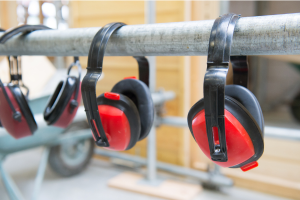
- Earmuffs (ear defenders)
- Custom-molded hearing protection
Employers should involve employees in the selection process to ensure that PPE is comfortable, hygienic, and suitable for the workplace environment.
Step 4: Train and Engage Employees
Effective workplace training should cover:
- Why hearing protection is being issued
- How and when to use hearing protection effectively
- How to check, care for, and store hearing protection correctly
- Early signs of hearing damage and how to report any faulty equipment or other health concerns
World Hearing Day is the perfect opportunity to run training sessions, refresher courses or awareness campaigns to provide employees with up-to-date knowledge and support for their hearing health.
A Call to Action for World Hearing Day 2026
Protecting employees from noise is not just about providing PPE and setting policies, it’s about culture. Employees are far more likely to take their hearing health safely if managers and supervisors set a good example by wearing the correct hearing protection and by following safety procedures.
By assessing risks, reducing noise, equipping employees properly, and fostering awareness, employers can prevent lifelong hearing damage and create safer, healthier workplaces.
This World Hearing Day, turn awareness into action. Ensure that employees can continue to listen, communicate, and thrive in the workplace and beyond for years to come.
Related E-Learning Courses:


About Us
Westminster Compliance was established to provide a more personal, proactive health and safety consultancy that would keep businesses working and compliant with ever-changing legislation.
Our presentations and training are interesting and fun because we want our clients to buy into health and safety, and definitely not to see it as a boring, unnecessary nuisance. We know that our best service is provided to small and medium sized organisations and have developed a system that works in most industries.
We stick with straightforward language, keeping away from jargon, and do not make ridiculous promises. Most importantly, we realise that we are working with human beings.