Why Near Miss Reporting Matters More Than Ever
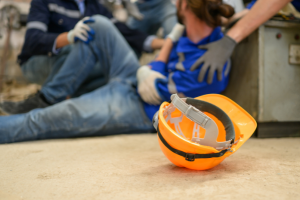
One important question we always ask clients during our annual health and safety audits is whether they’ve had any accidents or near misses in the past 12 months. The answer is very often the same:
“No.”
On the surface, this sounds positive, but it raises an important red flag.
Accidents and near misses can happen in any workplace and any industry, even organisations that are well-managed and are deemed low-risk. So, when organisations report none, it’s not necessarily because incidents haven’t occurred, but because they haven’t been reported correctly.
Why Aren’t Near Misses Being Reported?
When organisations report that they’ve had no accidents or near misses, three common explanations usually come to mind:
1. Lack of understanding or training
Staff may not have been trained correctly on how to report accidents and near misses. Often there is a lack of understanding as to why reporting them is important in the first place.
2. Fear of blame or backlash
Employees might worry they’ll be blamed, disciplined, or seen as “causing trouble.” Sometimes, they feel health and safety isn’t a top priority, so action will not be taken.
3. “It was only minor” thinking
Near misses are often seen as not serious enough to justify the paperwork. People don’t want to burden themselves or others with forms and processes for something that almost happened.
While understandable, these attitudes can have serious consequences.
Why Near Miss Reporting Is So Important
A near miss is a warning sign. It’s an opportunity to learn before someone is hurt. Even the most minor incident has an underlying cause. For example:
- A worker wasn’t trained correctly
- Supervision or management was lacking
- The wrong tools or equipment were used for the task
- Procedures weren’t clear or followed
- Environmental conditions played a role
If these issues aren’t identified and addressed, the same scenario could happen again with far more serious consequences next time. By actively encouraging near miss reporting, organisations can:
- Investigate what went wrong
- Identify weaknesses in processes or controls
- Implement improvements before someone is injured
- Reduce the likelihood of serious accidents or fatalities
Creating the Right Reporting Culture
It’s essential for employers and business owners to clearly communicate to their employees that reporting accidents and near misses is expected, supported, and valued. Health and safety culture is directly influenced by how directors and senior management respond to incidents:
- Are reports taken seriously?
- Are investigations focused on learning, not blame?
- Are improvements implemented?
When employees see that reporting leads to positive change, trust builds, and reporting rates improve.
Investigation Is About Learning, Not Blame
Accident and near miss investigations should never be about assigning fault. They are about understanding why something happened and preventing it from happening again.
Recently, we attended a highly informative webinar delivered by the HSE and NEBOSH, which clearly outlined:
- The powers of the HSE
- The stages of an investigation following an accident
- What inspectors will expect to see, including:
- Witness statements
- Risk Assessments and Method Statements (RAMS)
- Permits to work
- Equipment maintenance records
- Previous accident and near miss reports
Understanding this process is invaluable for any employer.
You can watch the webinar here – Investigating to Prevent: A Practical Guide to Workplace Accidents and Incidents
Final Thoughts
Accident and near miss reporting is one of the most powerful tools an organisation has to improve safety. It’s about learning lessons early, protecting people, and preventing the next incident from being far more serious.
If your organisation isn’t seeing any near miss reports, it may be time to ask, “Are people comfortable and confident enough to report?”
If you’d like support reviewing your accident reporting procedures, training your workforce, or improving your health and safety culture, Westminster Compliance is here to help. Contact us here to learn more.
Related E-Learning Courses:
About Us
Westminster Compliance was established to provide a more personal, proactive health and safety consultancy that would keep businesses working and compliant with ever-changing legislation.
Our presentations and training are interesting and fun because we want our clients to buy into health and safety, and definitely not to see it as a boring, unnecessary nuisance. We know that our best service is provided to small and medium sized organisations and have developed a system that works in most industries.
We stick with straightforward language, keeping away from jargon, and do not make ridiculous promises. Most importantly, we realise that we are working with human beings.