When Do COSHH Assessments Need Reviewing? A Practical Guide for Employers
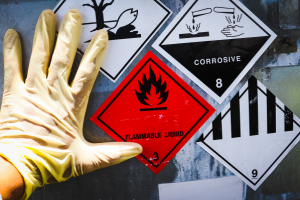
A Control of Substances Hazardous to Health assessment should never be treated as a document that is completed once and then filed away. Workplaces change, new products are introduced, employees take on different responsibilities, equipment deteriorates and working methods evolve.
When these changes affect how people may be exposed to hazardous substances, your COSHH assessments must change too.
Why COSHH Assessments Matter
The Control of Substances Hazardous to Health Regulations 2002 require employers to assess and control risks arising from substances that could harm employees’ health.
Hazardous substances are not limited to obviously dangerous industrial chemicals. Depending on the work being carried out, they can include:
- Cleaning products and disinfectants
- Paints, adhesives and solvents
- Dusts, fumes, vapours and gases
- Oils and lubricants
- Cement, flour and wood dust
- Biological agents and germs
Exposure can affect people in many different ways. Hazardous substances may cause skin irritation and dermatitis, allergic reactions, poisoning, burns, breathing difficulties, occupational asthma, organ damage, cancer or other long-term health conditions.
Effective assessments and control measures can help prevent conditions that may only become apparent many years after exposure.
When Should a COSHH Assessment Be Reviewed?
1. When a substance is introduced or changes
Review the assessment before using any new chemical, cleaning product, coating, adhesive or other hazardous substance.
You should also review it when a manufacturer updates a product’s formulation, classification, safety data sheet or handling instructions. Do not assume that products designed for the same purpose present the same risks.
2. When working methods, equipment or control measures change
Changes to how a task is carried out can significantly affect exposure.
Review the assessment when there are changes to:
- Application or production methods
- Cleaning and maintenance procedures
- Ventilation or extraction systems
- Storage and disposal arrangements
- Equipment or personal protective equipment
- The duration or frequency of the task
For example, spraying a product may create a much greater inhalation risk than applying it with a brush.
3. Following an accident, spill, near miss or control failure
Any uncontrolled release or unexpected exposure may indicate that existing arrangements are inadequate. The review should consider why the incident occurred, whether emergency procedures were effective and whether employees had suitable equipment, information and training.
Near misses should also be investigated, as they provide an opportunity to improve controls before someone is harmed.
4. When employees report symptoms or health surveillance raises concerns
Reports of skin irritation, breathing difficulties, headaches, dizziness or other symptoms should be investigated promptly. Employee feedback may reveal that extraction is ineffective, protective equipment is unsuitable or working practices are not being followed.
Where health surveillance identifies a possible work-related condition, the relevant assessment and control measures should be reviewed without delay.
5. When exposure limits, staffing or workplace circumstances change
Review assessments when workplace exposure limits or other relevant guidance changes. A review may also be required when:
- New employees or contractors are introduced
- Responsibilities or staffing levels change
- Tasks are transferred between teams
- A young, inexperienced or particularly vulnerable worker undertakes the task
- The workplace layout or working environment changes
The assessment must reflect the people carrying out the work and the conditions in which it is performed.
6. When the scheduled review date arrives
Even where there have been no obvious incidents or significant changes, COSHH assessments should still be reviewed regularly. COSHH does not prescribe a single review period for every workplace, but many employers use an annual review as a practical starting point.
The review should confirm that the information remains current, employees are following the required procedures and control measures continue to work effectively.
What Should Employers Check During a Review?
A practical review should confirm:
- The substance and supplier information is current
- The latest safety data sheet is available
- All relevant tasks and exposure routes are covered
- Employees at risk have been identified
- Existing controls remain effective
- Exposure is prevented or adequately controlled
- Required protective equipment remains suitable
- Storage, handling and disposal arrangements are appropriate
- Emergency procedures remain effective
- Employees have received suitable information and training
- Monitoring or health surveillance remains adequate
- Any previous actions have been completed
The assessment should reflect what actually happens in the workplace, rather than what the written procedure says should happen.
Common COSHH Review Mistakes
One common mistake is relying entirely on the review date printed on the document. A future review date does not mean the assessment can be ignored when a substance, process or control changes.
Other frequent problems include:
- Keeping outdated safety data sheets
- Assessing individual products without considering the task
- Automatically selecting personal protective equipment as the first control
- Failing to assess dusts, fumes or substances generated by a process
- Using generic assessments that do not reflect the workplace
- Updating an assessment without informing employees
- Recording a review without checking whether controls work in practice
COSHH assessments should be proportionate, practical and specific to the activities being undertaken.
Need Support With Your COSHH Assessments?
Managing COSHH documentation can become time-consuming, particularly where a business uses multiple products or operates across several workplaces. Westminster Compliance provides personal, proactive health and safety support designed around the needs, risks and working practices of each organisation.
Our Ongoing Compliance Support can provide businesses with step-by-step guidance, COSHH assessment templates, risk assessment documentation, regular regulatory updates, a dedicated Account Manager and an annual audit of health and safety paperwork and systems.
Contact Westminster Compliance today to discuss your COSHH arrangements and find out how our expert consultants can help your business protect its people and achieve ongoing compliance.
Related E-Learning Courses:


About Us
Westminster Compliance was established to provide a more personal, proactive health and safety consultancy that would keep businesses working and compliant with ever-changing legislation.
Our presentations and training are interesting and fun because we want our clients to buy into health and safety, and definitely not to see it as a boring, unnecessary nuisance. We know that our best service is provided to small and medium sized organisations and have developed a system that works in most industries.
We stick with straightforward language, keeping away from jargon, and do not make ridiculous promises. Most importantly, we realise that we are working with human beings.