Strengthening Safety Culture Through Effective PPE Management
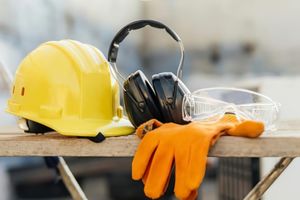
Personal Protective Equipment (PPE) is one of the most visible parts of workplace health and safety. Hard hats, gloves, safety footwear, eye protection and respiratory equipment are all familiar across construction sites, warehouses, workshops and many other working environments.
But simply providing PPE is not enough.
Effective PPE management means making sure the right equipment is selected, employees know how to use it, damaged items are replaced, and standards are maintained over time. Done properly, PPE becomes more than a compliance requirement, it becomes part of a stronger workplace safety culture.
PPE is the Last Line of Defence
PPE should never be the first response to a workplace hazard.
The Health and Safety Executive (HSE) describes PPE as the last resort within the hierarchy of controls. Employers should first look to eliminate or reduce risks through safer processes, equipment and working methods. PPE then provides an important final layer of protection.
Good PPE management is about much more than ordering equipment. It is about making sure that the final line of defence can be relied upon when needed.
Choosing the Right PPE
PPE must be suitable for the hazard, the task and the individual using it.
Depending on the work involved, this may include:
- Safety helmets
- Protective gloves
- Eye or face protection
- Hearing protection
- Safety footwear
- Respiratory Protective Equipment (RPE)
- High-visibility clothing
The starting point should always be your risk assessment. Where risks remain after other controls have been considered, the correct PPE should be selected.
Fit and comfort are also important. Poorly fitting or uncomfortable PPE may provide inadequate protection and can discourage consistent use.
Training Matters
Even high-quality PPE will not protect employees if it is worn incorrectly.
Workers should understand why PPE is required, how to fit and use it correctly, its limitations, how to check it before use, and how to report damaged or unsuitable equipment.
Training should also reinforce that PPE is not optional, even for quick or familiar tasks.
A strong safety culture is one where wearing the correct PPE is simply part of doing the job properly, not something employees only do when a manager is present.
Inspection, Maintenance and Replacement
PPE does not last forever.
Equipment can become damaged, worn or contaminated, reducing the level of protection it provides. Regular checks should therefore form part of your PPE management arrangements.
Employers should make sure PPE is:
- Clean and in good condition
- Stored correctly
- Inspected regularly
- Replaced when damaged or no longer effective
There should also be a simple process for employees to report problems and request replacements.
PPE and Occupational Health
Some workplace hazards cause harm over a much longer period.
HSE estimates that around 15,000 workers had work-related hearing problems each year when averaged across 2022/23 to 2024/25. There are also an estimated 11,000 lung disease deaths each year linked to past workplace exposures.
These figures highlight why protective equipment, alongside effective controls at source, should never become an afterthought.
Where hearing or respiratory protection is required, employers must make sure it is suitable for the risk and used correctly.
PPE and Safety Culture
The way PPE is managed can say a great deal about an organisation’s wider approach to health and safety.
If damaged equipment remains in use, PPE rules are regularly ignored or unsafe behaviour goes unchallenged, employees may quickly get the message that safety procedures are optional.
A positive safety culture looks different.
Managers lead by example, employees understand what is expected of them, defective equipment is reported promptly and PPE requirements are reviewed whenever work activities or risks change.
Is Your PPE Management Still Effective?
It is worth reviewing your arrangements regularly.
Ask yourself:
- Do our risk assessments clearly identify where PPE is required?
- Is the equipment suitable for the hazards employees face?
- Does it fit correctly?
- Are employees properly trained?
- Is PPE inspected and maintained?
- Is damaged equipment replaced promptly?
- Do managers consistently reinforce PPE requirements?
If the answer to any of these questions is unclear, it may be time for a review.
Building Safer Habits
While PPE alone cannot prevent every accident, correctly selected and properly managed equipment can provide an essential final layer of protection. More importantly, good PPE management helps reinforce a wider message: that health and safety is taken seriously every day.
At Westminster Compliance, we help organisations take the complexity and uncertainty out of workplace health and safety. Whether you need support reviewing risk assessments, PPE arrangements, policies, procedures or your wider health and safety management system, our team can provide practical advice tailored to your organisation.
Contact us today to discuss how we can help you keep your workplace safe, compliant and confident.
Related E-Learning Courses:

About Us
Westminster Compliance was established to provide a more personal, proactive health and safety consultancy that would keep businesses working and compliant with ever-changing legislation.
Our presentations and training are interesting and fun because we want our clients to buy into health and safety, and definitely not to see it as a boring, unnecessary nuisance. We know that our best service is provided to small and medium sized organisations and have developed a system that works in most industries.
We stick with straightforward language, keeping away from jargon, and do not make ridiculous promises. Most importantly, we realise that we are working with human beings.